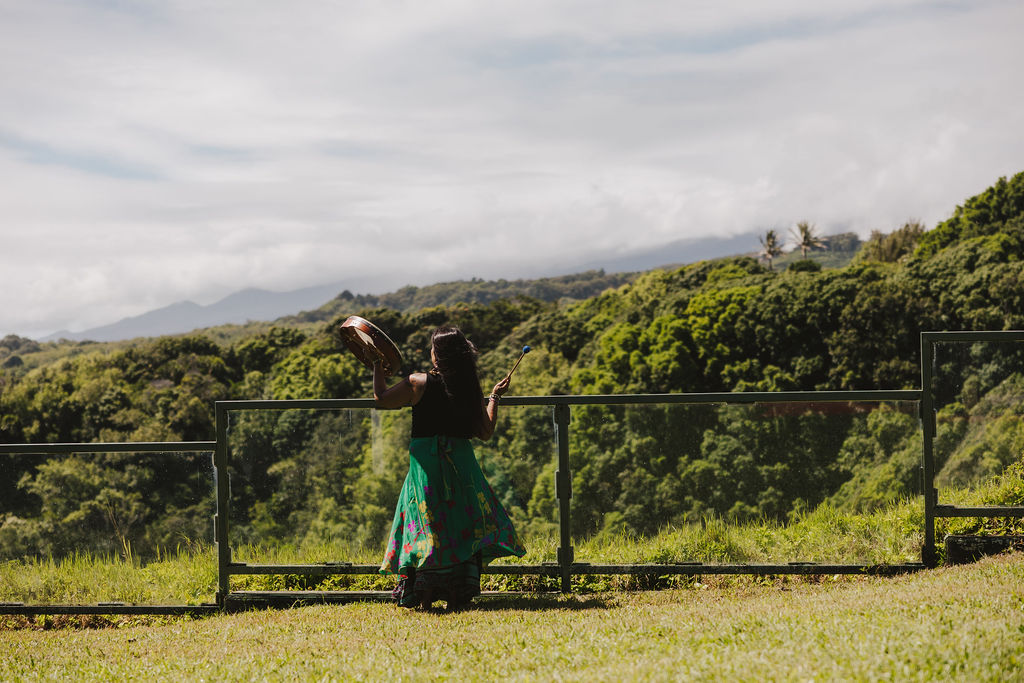
A woman in a colorful dress stands by a railing, holding a feather and facing a lush, green landscape with trees and distant mountains under a partly cloudy sky.

Our Culinary Philosophy

Rooted Here. Inspired Everywhere.

How the land, people, history, and many food traditions of Hawaiʻi shape the way we cook at Lotus Chefs.

Rooted Here. Inspired Everywhere.

The food we cook on Maui is shaped by where we are, who came before us, the many cultures that have made Hawaiʻi home, and the individual stories our own chefs bring to the table.
At Lotus Chefs, we don’t believe island-inspired food can be reduced to a handful of ingredients or familiar dishes. Our menus are a conversation between place, history, seasonality, culture, technique, and creativity.

A Complicated History · An Extraordinary Food Legacy

The food of Hawaiʻi is a profound reflection of the islands’ history, shaped by Native Hawaiian foodways and the many cultural influences that arrived during and after the plantation era. Rooted in Native Hawaiian foodways, the story begins with the bounty of land and sea, including kalo (taro), ʻulu (breadfruit), ʻuala (sweet potato), and fish. Traditional practices and techniques, including imu cooking, reflect a deep relationship with land, community, and the value of aloha ʻāina.

Plantation cuisine in Hawaiʻi emerged from the complex history of migration, labor, and cultural exchange during the 19th and 20th centuries. Immigrant workers from Japan, China, the Philippines, Portugal, Korea, and other regions brought their culinary traditions to the islands, blending them with local ingredients. This created a shared culinary language that gave rise to beloved local dishes like saimin, malasadas, and adobo. However, this evolution came at a cost. The sugarcane and pineapple plantations that shaped this cuisine also displaced Indigenous communities, disrupted traditional ways of life, and eroded Native Hawaiian sovereignty and cultural practices.

At Lotus Chefs, we look to both the deep roots of Native Hawaiian foodways and the multicultural influences that emerged through Hawaiʻi’s plantation history. We acknowledge the struggles and injustices of Hawaiʻi’s past, including the exploitation of labor and the impacts on Native Hawaiian traditions.

By drawing from traditional techniques, cultural influences, and locally sourced ingredients, we aim to create food that reflects Hawaiʻi’s diverse culinary landscape while remaining thoughtful, contemporary, and approachable to the many different guests who gather around our tables.

The food of Hawaiʻi today reflects resilience, adaptation, and community. From the comforting sweetness of Portuguese sweet bread to the umami depth of Japanese miso and the vibrant spice of Korean gochujang, these flavors tell the story of Hawaiʻi’s multicultural heritage. Simultaneously, we strive to highlight Native Hawaiian ingredients and cooking methods that predate plantation history, showcasing the enduring connection to the land and its resources. Our menus become a conversation between past and present, influenced by the traditions that shaped food in Hawaiʻi while leaving room for seasonality, creativity, and our chefs’ own heritages and stories.

Lotus Chefs does not claim Native Hawaiian identity or ownership over the food traditions of Hawaiʻi. We are a Maui-based team whose lives and work have been deeply shaped by this place, and we believe cooking here carries a responsibility: to learn the history behind the food we serve, acknowledge where our inspiration comes from, support local farmers, fishers, makers, and producers, and approach the traditions we encounter with curiosity, respect, and gratitude.

At Lotus Chefs, cuisine is never just about the food. It’s about the stories behind it, the people who grow and prepare it, the connections created around the table, and the love infused into every dish. We cook with curiosity, gratitude, and care, allowing the history, abundance, and many influences of Hawaiʻi to inform what we create without pretending every story is ours to tell. And then, ultimately, we do what we love most: gather people around the table and feed them well.

OUR INTERPRETATION

How We Share Story through Food

So what does all of this history mean for the way we cook today?

It means you might find Japanese miso alongside Maui-grown vegetables, Korean gochujang in a sauce, Filipino flavors woven into a family-style dinner, or fresh island fish prepared with classical European technique. Our food is also influenced by California freshness, our chefs’ travels and training, and the dishes and traditions each woman brings from her own life.

There is no single cuisine we are trying to recreate.

Instead, we cook from where we are: inspired by Hawaiʻi’s layered food culture, guided by what is growing and available locally, and interpreted through the individual chefs standing in our kitchen.

Our culinary style naturally leans pan-Asian and island-inspired, layered with California freshness, classical technique, global influence, and the individual heritage and experience of each chef on our team.

We don’t attempt to present ourselves as authorities on every culture represented in Hawaiʻi’s food.

We cook with curiosity and respect, acknowledge where our inspiration comes from, and allow the food to keep evolving.

We also understand the responsibility that comes with cooking in a place with such a deep and complicated cultural history. Lotus Chefs does not claim Native Hawaiian identity or ownership over the food traditions of Hawaiʻi. We believe our role is to learn where the food and traditions we draw from come from, give credit, support local farmers and producers, and approach those influences with curiosity, respect, and gratitude.

Our menus will continue to evolve, just as our team does. But the intention remains the same: to create food that feels genuinely connected to Maui without pretending that every story here is ours to tell.

Because that’s what food in Hawaiʻi has always done.

Everyone Belongs at the Table.

There is no single way to eat, just as there is no single story behind the food we cook.

Some guests are vegan. Some want steak. Some avoid gluten. Some have serious allergies. Some will try absolutely anything. Some are five years old and deeply suspicious of anything green.

We design our menus around the people actually sitting at the table, because thoughtful hospitality means making everyone feel considered. Dietary accommodations aren’t an afterthought or a lesser version of the “real” menu. They’re simply part of how we cook.

History matters. Ingredients matter. Technique matters. Where our food comes from, and whose traditions inspire it, matters.

But eventually, the plates reach the table.

Someone passes a dish. Someone tries something new. The kids steal a bite from Grandpa’s plate. Another bottle gets opened. Stories are told, everyone stays a little longer than expected, and for a moment, food does what it has always done best.

It brings us together.